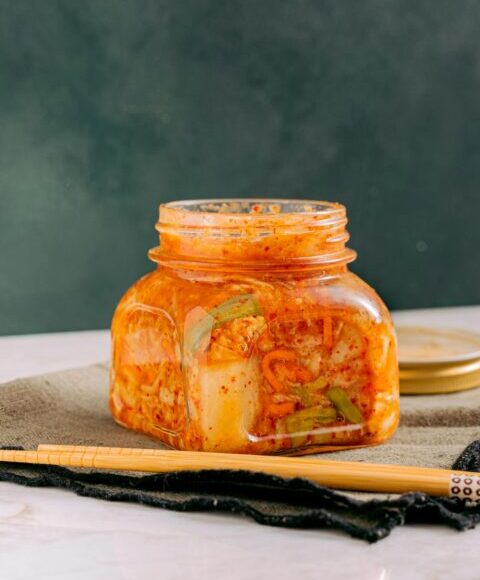
This recipe for kimchi is a great recipe if you are new to fermenting.
I admit, I am very new to the practice of fermenting. I have been preserving foods for many years by canning and pickling and am very excited to learn another technique.
Being somewhat familiar with the process of making sauerkraut it is feels familiar but have had my interest piqued by the complexity of kimchi after receiving some recently.
I had tasted it once before, but the heat was overpowering any flavour that was present. The homemade versions that I have tried recently are full of flavour with some heat. But a good heat, the kind that leaves you wanting more.
Outside of the Box Thinking
I know the few recipes for Kimchi I have looked at all start with Napa Cabbage.
With a garden full of fresh cabbage I grew from seed I could not bring myself to purchasing Napa Cabbage this weekend. The heads I found in the produce department looked far from fresh. In doing some research about kimchi there are many variations, but what makes kimchi authentic is the gochugaru in the recipe.

Slicing the Cabbage
To make for less work cut the cabbage straight down the center of the head with the stem side on the cutting board. Place a half, flat side down on the cutting board and slice thinly. Once the half is sliced, turn the cutting board 45 degrees and cut through the slices.

Place the cabbage in a large bowl. Add 1/4 cup of course salt to the cabbage. Using your hand massage the salt into the cabbage. This tenderizes the cabbage and allows for better fermentation. Once the cabbage feels tender, cover it with cold water. Use a plate to push the cabbage down below the water level. Place something heavy on top of the plate to keep the cabbage submerged. Set aside for 2 hours.

Daikon Radish
I love daikon radish and decided to include it in this kimchi. I am able to find it locally and really enjoy the flavour of it. The radish should be bright white and tender to cut. I love the texture of vegetables cut into matchsticks for kimchi, they are firm and have a nice bite to them, even after fermenting.
I have seen recipes using kohlrabi which I definitely plan on trying in the future.
Using Fish Sauce
You may wonder do you really need to use fish sauce? The answer is yes. The addition of fish sauce adds a level of umami to the kimchi. It will not be fishy tasting and really lends itself to adding a level of flavour that will take the kimchi to the next level.

Packing the Jars
Use fresh clean jars for fermenting the kimchi. A canning funnel makes for clean easy filling. Use a wooden spoon to push the kimchi tightly into the jars. Once full and tightly packed wipe the rim of the jar with a clean cloth and add a lid and screw band to seal.
Place the jars into a container to capture any brine that escapes while the fermenting process is happening.
Check the kimchi daily, pushing the vegetables under the brine. Taste test until it is the desired flavour. Store the finished kimchi in the fridge.

Kimchi

- 2 pounds of cabbage/ sliced thin
- ¼ cup of course salt
- 9 oz daikon radish - cut into matchsticks
- 3 small carrots -cut into matchsticks
- 1 tablespoon garlic - grated
- 1 teaspoon ginger - grated
- 3 tablespoons scallions - chopped
- 4 tablespoons gochugaru
- sugar
- 2 tablespoons fish sauce
- Cut the head of cabbage straight down the center of the head with the stem side on the cutting board.
- Place a half, flat side down on the cutting board and slice the head thinly.
- Once the half is sliced, turn the cutting board 45 degrees and cut through the slices.
- Cut the daikon into match sticks.
- Cut the carrots into match sticks.
- Grate and garlic and ginger
- Place the cabbage in a large bowl.
- Add ¼ cup of course salt to the cabbage.
- Using your hand massage the salt into the cabbage.
- This tenderizes the cabbage and allows for better fermentation.
- Once the cabbage feels tender, cover it with cold water.
- Use a plate to push the cabbage down below the water level.
- Place something heavy on top of the plate to keep the cabbage submerged.
- Set aside for 2 hours.
- After 2 hours strain the cabbage in a large colander.
- Rinse with cold water and strain again.
- Repeat twice more.
- Take handfuls of cabbage and squeeze out as much liquid as possible.
- Set aside.
- Combine garlic, ginger, sugar and fish sauce in a large bowl.
- Add the gochugaru and mix well.
- Add the cabbage, daikon radish, carrots and scallions.
- Using your hands massage the spicy seasoning mixture into the cabbage, radish and carrots.
- Once the vegetables have been throughoughly massaged pack the kimchi into mason jars.
- Push the kimchi tightly into the jars, making sure it is completely covered in brine.
- Seal the jars and place into a container to catch any brine that may seep out from the jars.
- Set in a cool place for 3 -5 days.
- Check the kimchi daily making sure to push the vegetables below the surface of the brine.
- Be sure to taste it each day until it is the flavour you are looking for.
- Store in the finished kimchi in the fridge.
I enjoy this as a side when I am having a simple lunch. It would be a great addition on a charcuterie board or in a sandwich or wrap where you enjoy a pungent condiment.
It is traditionally served with rice or noodles and even grilled meats.
No matter how you enjoy it, it is a healthy spicy dish that is easy to make.


